Kazakhstan's nuclear industry has a long and rich history, beginning in the Soviet period and continuing to the present day. Below is a timeline of key stages in the industry's development: from the first uranium deposits and research reactors to the launch of the modern nuclear energy program.
A nuclear reactor is a facility where a controlled chain reaction of uranium fission takes place.

Reactor safety is ensured by multi-level protection systems, such as a double hermetic shell, a combination of passive and active protection systems, including a cooling system and emergency shutdown.
The reaction rate is regulated by special control rods — they absorb excess neutrons.
Working principle: nuclear energy is converted into heat, and then into electricity.
Below are the main types of reactors being considered as possible options for the construction of a nuclear power plant in Kazakhstan.
Generation: III+
Developer: Rosatom (Russia)
Thermal capacity: 3300 MW(th)
Electric capacity: 1200 MW(e)
Core: 163 fuel assemblies
Scheme: four-loop
Fuel cycle: 12–18 months (extendable)
VVER combines active and passive safety systems, ensuring stable operation even in case of loss of external power supply. The design complies with IAEA international standards for generation III+ plants.
Deployed: Russia, Belarus
Under construction: Egypt, Bangladesh, Hungary, China
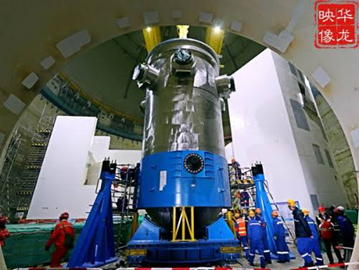
Generation: III+
Developer: CNNC (China)
Thermal capacity: 3050 MW(th)
Electric capacity: 1200 MW(e)
Core: 177 CF3 fuel assemblies (UO₂)
Scheme: three-loop
Fuel cycle: 18 months (extendable)
HPR1000 combines active and passive safety systems.
Deployed:
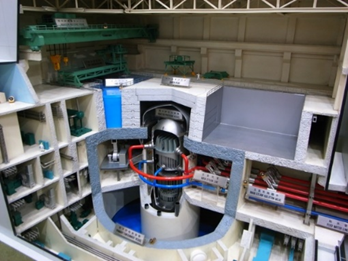
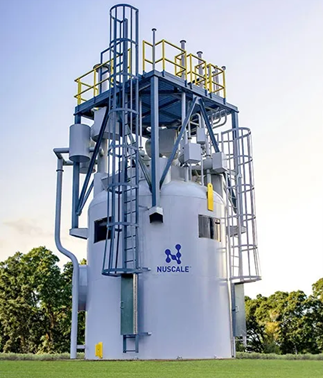
Modern nuclear power plants are high-tech facilities where safety is a priority principle of design, construction and operation.
The risk of an accident does not exceed 1:10 million per year. The resilience of modern designs can withstand earthquakes up to magnitude 9.
According to IAEA data, the risk of serious accidents at modern reactors is extremely low and continues to decrease thanks to strict regulation and innovation.
Nuclear safety is aimed at preventing accidents and controlling the chain reaction. Modern reactors have up to four protection barriers: fuel matrix, fuel cladding, hermetic reactor vessel and protective shell.
Radiation safety is aimed at minimizing radiation doses for workers, the public and the environment.
The effective dose for NPP personnel does not exceed 20 mSv per year, and for the public — less than 1 mSv/year above natural background.
Globally, according to the World Nuclear Association, the radiation background from NPPs is comparable to natural background from space and soil.
Nuclear physical security covers measures against terrorism, theft of nuclear materials and unauthorized access to them. Unlike nuclear safety (accident prevention), it is focused on threats related to human activities.
Modern nuclear power plants demonstrate a high level of safety due to multi-level systems, strict regulation and continuous improvement. NPP safety is a combination of national norms, technologies, human factors and international standards, providing reliable protection without compromise for human health and the environment.
Nuclear energy is one of the most environmentally friendly sources of electricity.
Сравните выбросы CO₂ при одинаковом объеме генерации для разных источников энергии.
Расчет является ориентировочным и основан на усредненных коэффициентах выбросов. Фактические значения могут отличаться в зависимости от технологий и условий эксплуатации.
Выбросы CO₂
820 т
Уголь · 1 000 МВт·ч
При выбранном объеме генерации уголь формирует значительно более высокий уровень выбросов CO₂ по сравнению с низкоуглеродными источниками.
Сравнение с атомной энергией
68,3×
Это во столько раз больше, чем у атомной энергии при том же объеме.
Эквивалент автомобилей
≈ 182
Принято из расчета 4.5 тонны CO₂ на 1 автомобиль в год.
Common myths about nuclear energy and brief facts that counter them.
Myth: Living near a NPP is dangerous — it emits radiation
Fact: The radiation dose from the plant is minimal and safe.
Myth: A NPP can explode like Chernobyl
Fact: Modern reactors have multi-level protection — automatic shutdown, passive cooling, hermetic containment. The risk of an accident does not exceed 1:10 million per year.
Myth: Radiation contaminates food and air
Fact: All emissions and waste are under strict control, the external environment receives no contamination.
Myth: Working at a NPP is harmful
Fact: Personnel are protected, the exposure level is significantly below international standards.
Myth: Any radiation is deadly
Fact: Radiation is a natural part of nature. Small doses are safe for humans.
Myth: NPPs harm the environment
Fact: Nuclear plants do not emit CO₂ and are considered an environmentally friendly energy source.
Myth: A NPP can fail during an earthquake and cause bad consequences
Fact: Safety systems of modern NPPs are designed for earthquakes up to magnitude 9 and can shut down the reactor without threat to the environment.
Test Your Knowledge